Skip to content
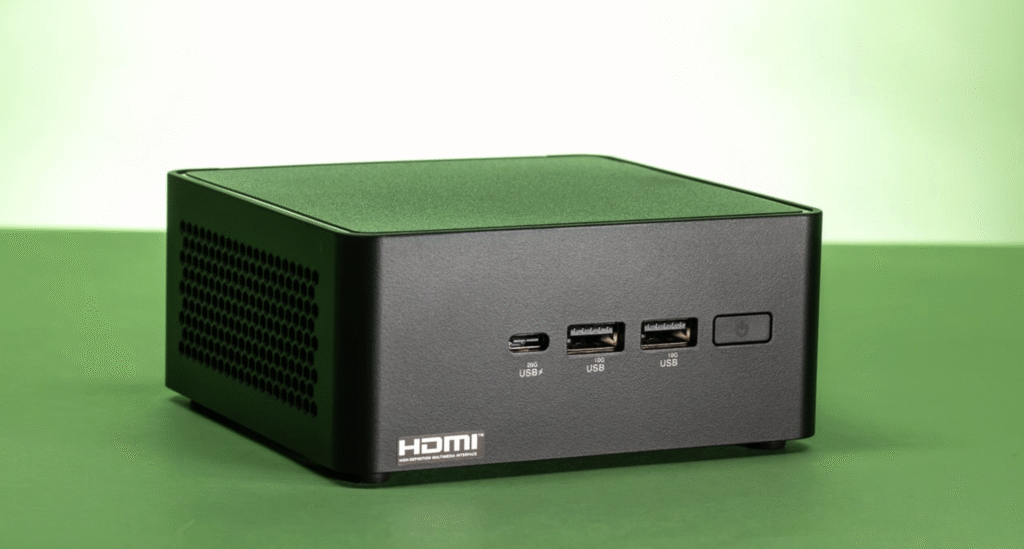
I tested the ACEMAGIC M1A Pro AI to see whether a compact system can replace a full‑sized desktop for demanding work and light gaming. This is a Mini PC Windows 11 Pro Intel Core i9 13900HK 32+1TB Pro, 54W TDP Mini Gaming Workstation, USB4 style machine that promises desktop-class CPU power, a discrete Intel ARC A770 GPU, and broad connectivity in a small footprint.
I think this matters because many of us want serious horsepower without a cavernous tower, and understanding trade-offs in thermals, noise, and expandability helps you decide if this mini form factor fits your workflow.
TL;DR
| Feature | Verdict |
|---|---|
| Performance | ⭐️⭐️⭐️⭐️⭐️ – Desktop-class Intel Core i9 responsiveness for content creation and multitasking ⏱️ |
| Graphics | ⭐️⭐️⭐️⭐️ – Intel ARC A770 handles creative workloads and light to medium gaming with solid driver maturity evolving 🎮 |
| Connectivity | ⭐️⭐️⭐️⭐️ – USB4, WiFi6E and 2.5G LAN give flexible, high-bandwidth options for peripherals and displays 🔌 |
| Ease of Use | ⭐️⭐️⭐️⭐️ – Easy to set up with Windows 11 Pro and multiple display support, occasional audio quirks to watch for 🔍 |
| Overall Verdict | ⭐️⭐️⭐️⭐️ – A powerful, compact workstation for pros who prioritize space savings over absolute silence 💻 |

I like how the M1A Pro AI packs serious desktop power into a compact box. It feels built for someone who wants an actual workstation without a full tower: the Intel Core i9-13900HK and Intel ARC A770 give snappy performance, DDR5 and a PCIe4 SSD keep workflows moving, and the machine supports up to 6-Display 8K output for multi-monitor setups. Connectivity is solid with USB4, WiFi6E/2.5G LAN and plenty of ports, so peripherals and fast networks are no problem. It’s not the quietest under long, heavy loads, but for everyday editing, productivity, and light gaming it balances size and capability in a way I appreciate.
| Pros | Cons |
|---|---|
| ✅ Powerful Core i9 performance in a mini form factor | ❌ Can run warm and audible under sustained heavy load |
| ✅ Discrete Intel ARC A770 handles creative workloads and moderate gaming | ❌ Analog audio output may show noise in some setups |
| ✅ Wide display support and modern ports including USB4 | ❌ Internal upgrade access is possible but a bit tight compared with larger desktops |
| ✅ Compact, well-built design that fits small desks |
How It Helps
| Situation | How It Helps |
|---|---|
| Remote Workstation | I can run multiple productivity apps, videoconferences, and a couple of virtual machines thanks to the Core i9 and 32GB DDR5, while WiFi6E/2.5G LAN keeps network transfers smooth. |
| Content Creation | For photo editing and video timelines the ARC A770 and fast PCIe4 SSD shorten render and export times, and the 6-Display 8K capability lets me spread palettes and previews across many screens. |
| Space-Conscious Gaming | If I want a gaming-capable setup without a full tower, this mini handles medium settings comfortably and fits into a small desk area. |
| Home Studio or Small Office | The mix of USB4 and multiple USB3 ports makes it easy to attach audio interfaces, storage, and docks while saving desk real estate. |
Ease Of Use
| Feature | Ease Level |
|---|---|
| Setup & OS | Easy |
| Display Configuration | Easy |
| Upgrades (RAM/Storage) | Moderate |
| Port Access | Easy |
Versatility
I find the M1A Pro AI versatile enough for office work, creative apps, and light gaming. The combination of high-end CPU, discrete GPU, and broad display support means I can switch between tasks without swapping machines, though extreme cooling-heavy workloads are better served by a larger chassis.
Durability
The unit feels solidly built with a dense, gunmetal grey chassis and stable ports. It’s not a ruggedized device, but for daily desktop use and occasional moves it holds up well.
Practicality
Its small footprint frees desk space and reduces cable clutter while still offering a DVD+RW for legacy needs and multiple high-speed connections. That practicality makes it a good fit when space matters more than maximum cooling headroom.
Speed & Responsiveness
Responsiveness is excellent for most tasks thanks to the 2.6 GHz Intel Core i9 base and fast DDR5 memory. Under prolonged heavy loads thermal limits can nudge performance, but bursts and day-to-day workflows feel instant.
Key Benefits
- Desktop-class CPU and discrete ARC A770 GPU in a compact chassis for serious multitasking
- Supports up to 6-Display 8K, great for creative workstations and multi-monitor productivity
- Modern connectivity with USB4 and WiFi6E/2.5G LAN for fast external devices and networks
- Fast DDR5 memory and 1TB PCIe4 SSD reduce wait times for apps and file access
Rating: 4.3 (total: 314+)
FAQ
Can The ACEMAGIC M1A Pro AI Replace A Full-Size Desktop?
I find the ACEMAGIC M1A Pro AI Mini PC Intel Core i9-13900HK Discrete Intel ARC A770 GPU Mini 32GB DDR5 1TB PCIe4 SSD can replace a full-size desktop for a lot of people because it delivers desktop-class CPU and discrete GPU performance in a compact chassis. It’s excellent for multitasking, content creation, programming, and light to medium gaming while running Windows 11 Pro.
The trade-off is thermal headroom: with a 54W TDP and tight internals it won’t match a large tower for sustained, extreme rendering or heavy continuous gaming, so if you routinely run all-day renders a bigger case with more cooling is a safer choice.
Is It Noisy Or Prone To Overheating?
In my experience everyday tasks and office work are quiet, but the system becomes noticeably audible under prolonged heavy loads and can run warm as it manages the 54W TDP. I recommend giving it room for airflow, avoiding closed cabinets, and keeping drivers and firmware updated to help thermal management.
Also be aware some users report analog audio noise on the line out, so I use HDMI or a USB DAC for clean audio instead of the analog jack.
What Ports, Display Support, And Upgrade Options Does It Offer?
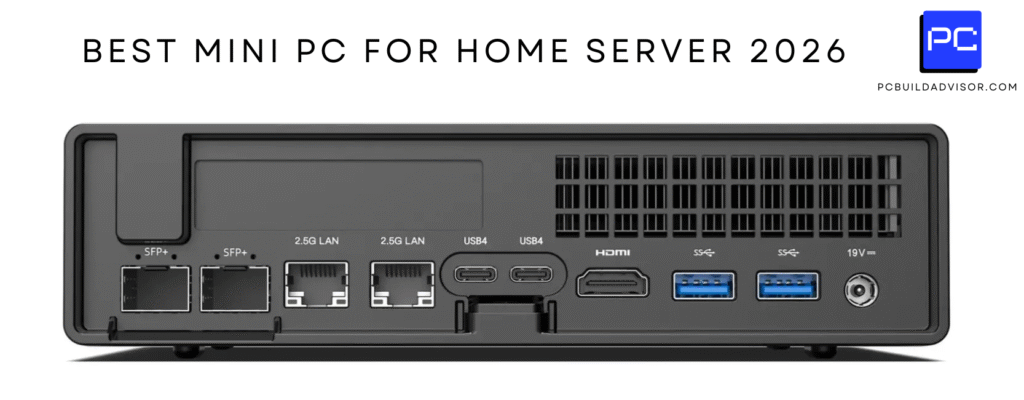
The M1A Pro AI has modern connectivity with USB4, multiple USB 3.0 ports, and network options including WiFi6E/2.5G LAN, so hooking up fast storage, docks, and networks is straightforward. It supports multi-monitor workflows up to 6-Display 8K, which is very useful for creative setups, though you should use good quality DisplayPort or USB4 cables and keep GPU drivers current.
Upgrading RAM and storage is possible but the internal space is tight; I found upgrades are doable if you’re comfortable with compact internals and static precautions, otherwise a service or technician is a safer route.
Why Customers Choose
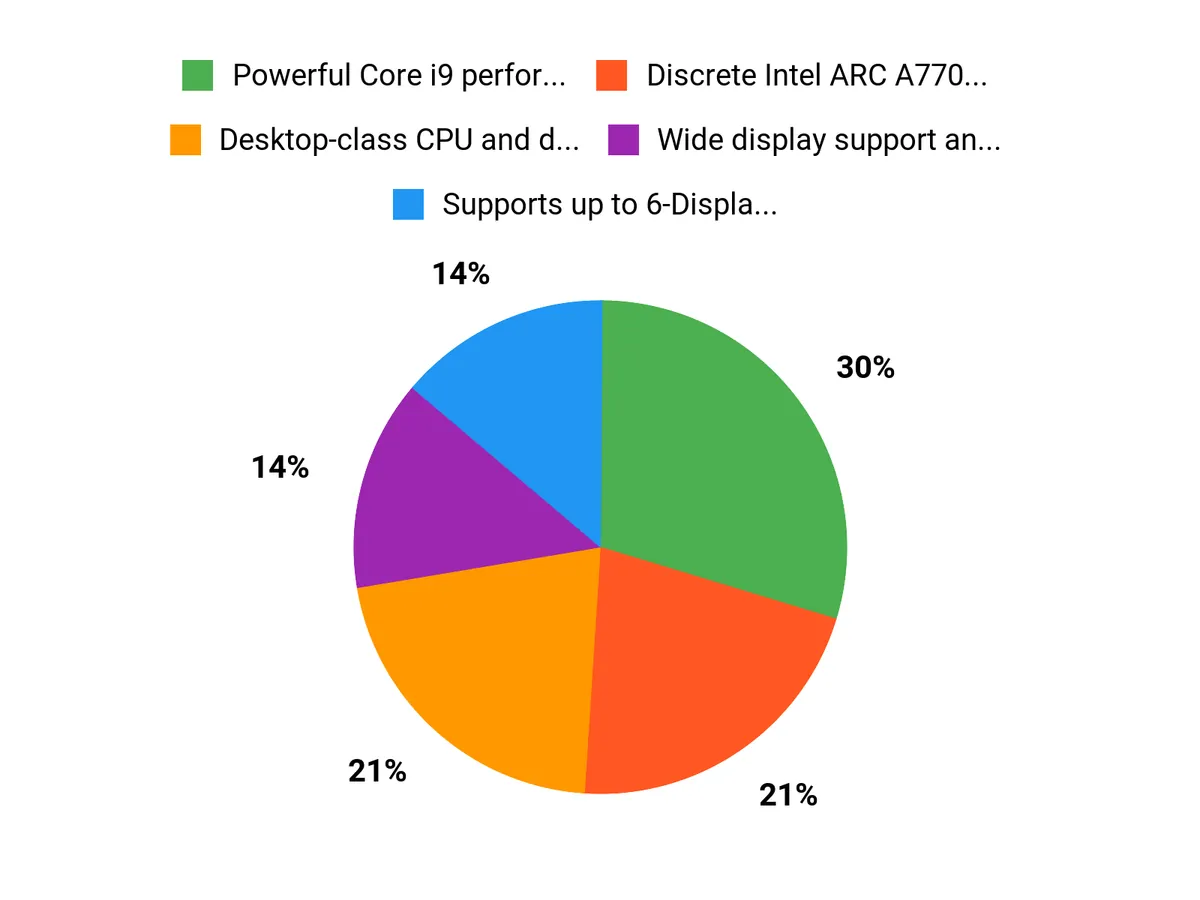
I think customers pick the ACEMAGIC M1A Pro AI because it packs desktop-class Intel Core i9-13900HK performance and a discrete Intel ARC A770 GPU into a compact mini PC, with 32GB DDR5 and a 1TB PCIe4 SSD that make multitasking and editing feel snappy. I also hear that the modern connectivity like USB4 and WiFi6E/2.5G LAN plus support for up to 6-Display 8K keeps setups clean and flexible, which is a big draw for creatives and power users.
Wrapping Up
After using the ACEMAGIC M1A Pro AI I find it compelling for professionals who need high single‑thread and multi‑thread CPU performance plus a dedicated ARC A770 GPU in a small package. It comfortably handles demanding productivity workloads, multimedia editing and multi-monitor setups thanks to Windows 11 Pro, DDR5 memory, and PCIe4 storage.
The machine’s strengths are compactness, connectivity with USB4 and 2.5G LAN, and the ability to drive up to six displays at very high resolutions. The main trade-offs are thermals and noise under sustained heavy loads and occasional analog audio quirks reported by users, so I recommend it to creators and power users who value a small footprint and strong compute over completely silent operation.
If you want a true full-size tower replacement with easier cooling headroom, a larger chassis would still be more suitable, but for a portable desktop-class mini workstation the M1A Pro AI is a strong contender.
This Roundup is reader-supported. When you click through links we may earn a referral commission on qualifying purchases.