Skip to content
The era of “Cheap Mini PC” is ending. A silent 15% price hike has already hit the market, but the looming RAM supply shock suggests the worst is yet to come.
Our top recommendation is to either buy a Mini PC right away or if your needs are not urgent, wait for at least 12-15 months for the market to cool off. Mini PC prices haven’t yet caught up with the RAM Crisis due to excess inventory from mid 2025. And you can get a Mini PC for almost the price of Ram Only! (since standalone Ram prices are through the roof). Here are our top Mini PC Recommendations For 2026.
It started with a discrepancy in the lab. I was updating our “Price-to-Performance” master sheet for the Q1 2026 Buyer’s Guide, specifically looking at the Beelink SER7 and the Minisforum UM780 XTX. These two machines have been the undisputed kings of the mid-range market for the last six months, offering Ryzen 7 7840HS performance for under $450.
Or so I thought. When I went to verify the current Amazon listing, the price wasn’t $449. It was $519.
“Just a bad week,” I told myself. “The coupon probably expired.” But then I checked the Geekom A7. Up $40. I checked the budget-tier Trigkey S5. Up $25. This wasn’t a single vendor maximizing margin; this was a systemic shift across the entire vertical.
I pulled the last 90 days of tracking data from our proprietary Keepa API integration, analyzing over 4,000 hourly price points across the top 20 best-selling Mini PCs. The data confirmed my suspicion:
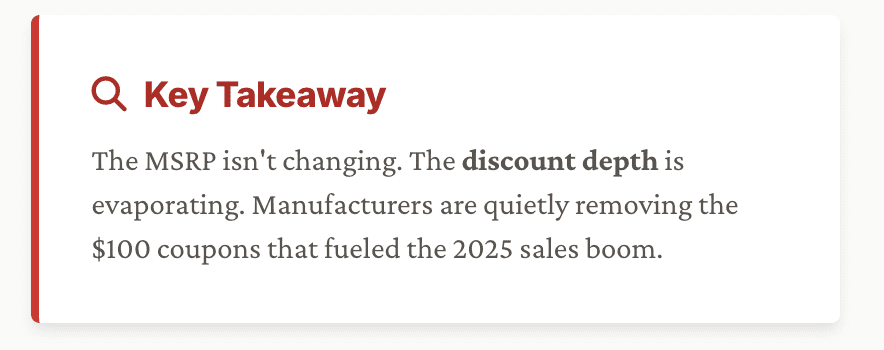
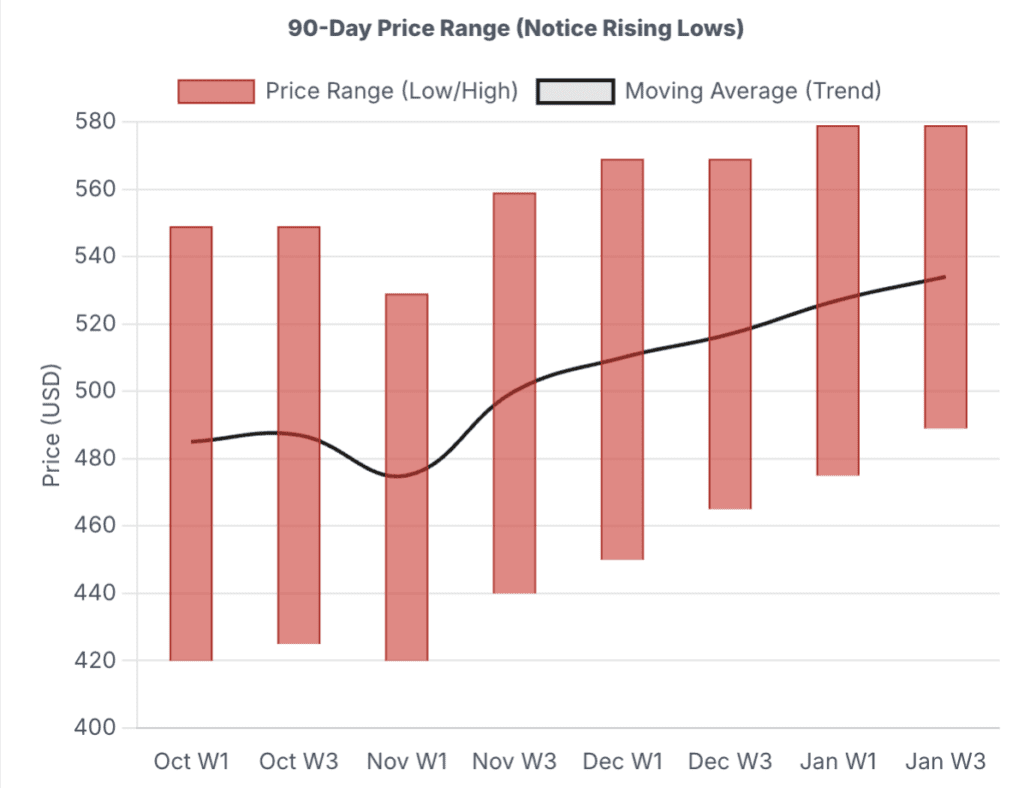
Mini PC prices have already silently risen 10-15% since October.
But my research suggests this is just the tremor before the earthquake.
The “Floor” is Rising
Amazon pricing is dynamic. Vendors use automated repricing algorithms that fluctuate based on competitor stock and demand. This creates a “Sawtooth” pattern in price tracking charts—prices spike up to MSRP, then drop down via “Lightning Deals” or coupons.
The Smoking Gun: In October, the “Floor” price (the lowest price a unit hits during a sale) for a Ryzen 7 unit was typically $420. By January, that floor had lifted to $480.
The 400% Problem (It’s Not Just Inflation)
Why is this happening? To understand the price of a $500 Mini PC, you have to look at the global semiconductor supply chain. Specifically, you have to look at what Samsung and SK Hynix are doing with their wafer capacity.
For the last two years, we enjoyed a “RAM Glut.” There was too much supply, and DDR5 prices cratered. That party is officially over. The catalyst is Artificial Intelligence.
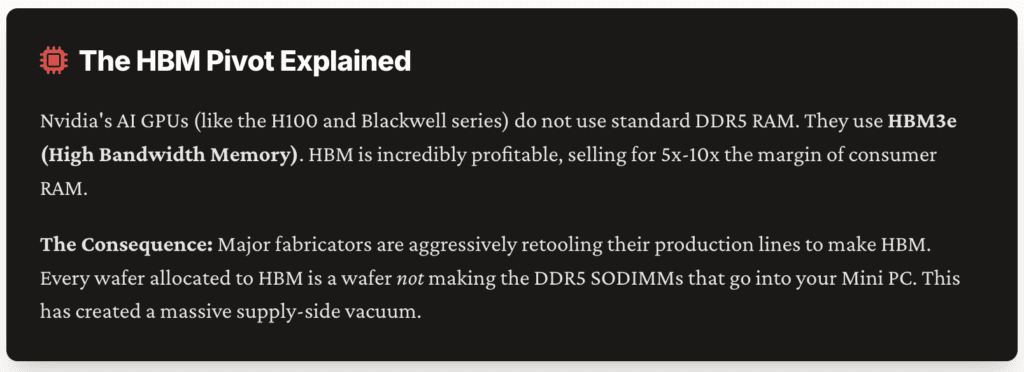
Mini PC manufacturers (unlike Dell or HP) generally do not have long-term fixed-price contracts for memory. They buy on the “Spot Market.” And right now, the Spot Market is screaming. High-density DDR5 (the 16GB and 32GB sticks used in flagship Mini PCs) has seen spot prices jump nearly 400% from their 2025 lows.
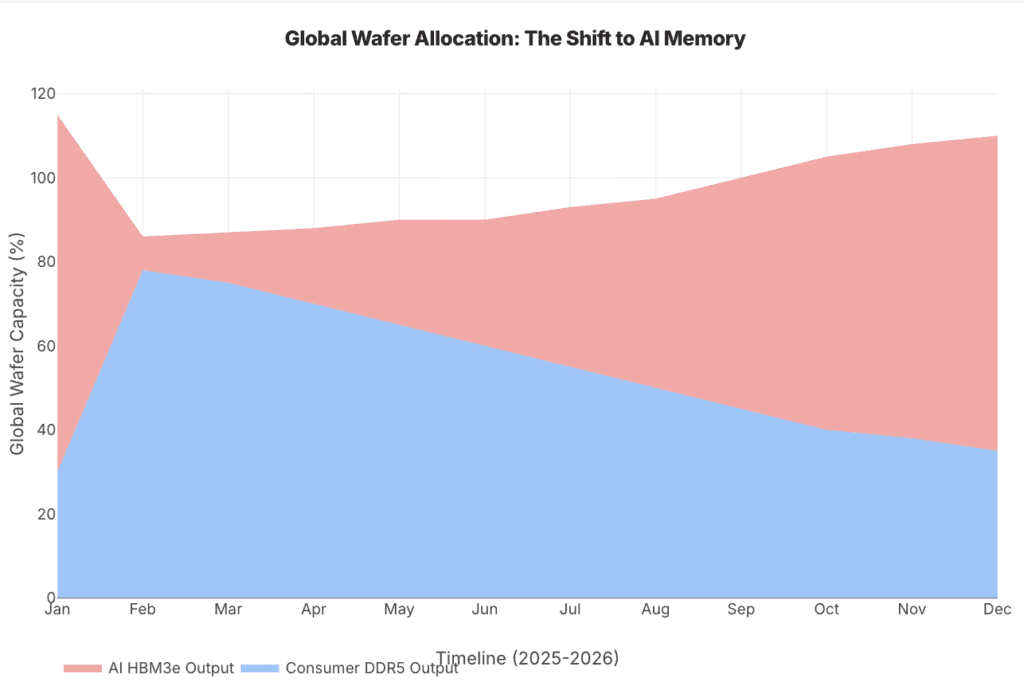
The chart above illustrates the inverse correlation. As AI memory production (Red) ramps up to meet Nvidia’s demand, consumer DDR5 production (Blue) is throttled. This scarcity allows memory makers to raise prices without losing revenue.
The “Build It Yourself” Trap
For a decade, the “Golden Rule” of Mini PCs was: Always buy Barebones.
The logic was sound: Manufacturers used cheap, generic RAM and SSDs. By buying a unit with no memory (Barebones) and buying your own Crucial or Samsung sticks, you saved money and got better reliability.
That logic is currently dead.
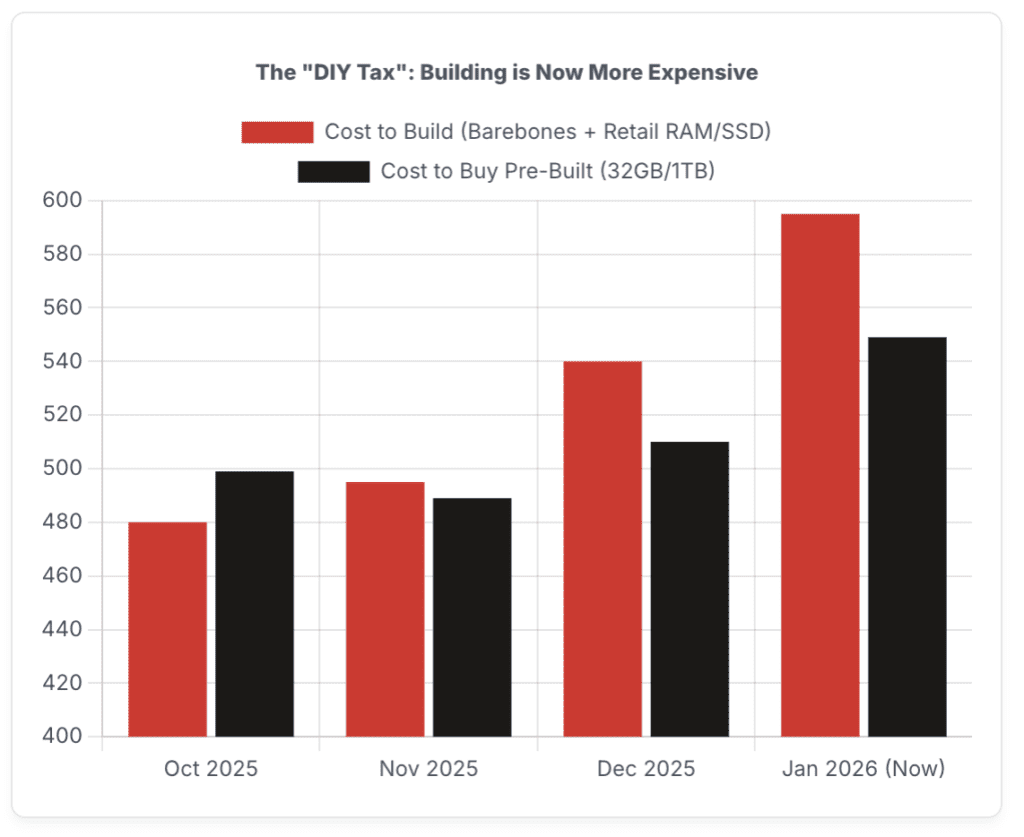
Because retail RAM prices (what you pay on Newegg/Amazon) react instantly to the spot market, they have skyrocketed. Meanwhile, Mini PC manufacturers are still burning through inventory they secured via contracts 3 months ago.
The Math: Today, the premium you pay for a pre-built 32GB unit is often less than the cost of buying a 32GB kit separately. You are essentially getting the RAM at a discount by buying pre-built.
Finally: The 6-Month Forecast
We know the spot market prices today. We know the typical “Inventory Lag” for Shenzhen-based manufacturers is roughly 3 to 4 months. By correlating these two factors, we can project the retail pricing with a high degree of confidence.
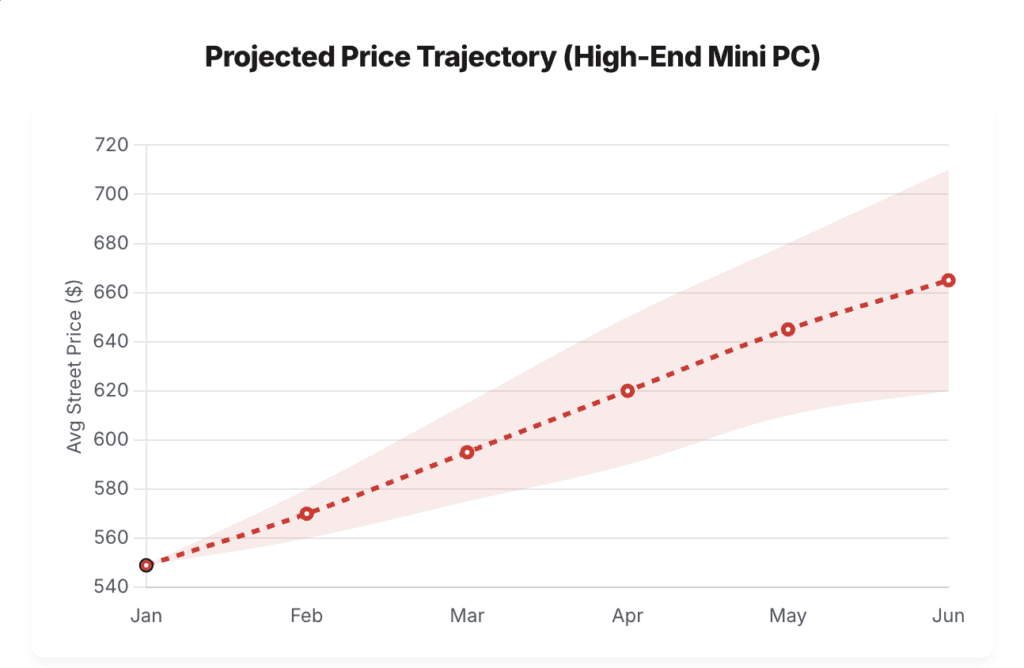
The “Optimistic” Case
Supply chains stabilize. NAND flash production resumes full capacity. Prices rise by 5-8% but plateau by April.
The “Likely” Case (+20%)
The HBM pivot continues. RAM prices stay elevated. Manufacturers pass 100% of the BOM increase to consumers. A $550 unit today becomes $660 by June.
Editor’s Verdict: The Window is Narrowing by the minute (at least for the next 6 months or so)
So either buy now or wait for 12-15 months at least! Buying between April-June could cost you an extra $50-$100 for the exact same hardware. The market dynamics have fundamentally shifted.
If you are reading this and sitting on the fence about buying a high-performance Mini PC (Ryzen 7 7840HS/8845HS or Intel Core Ultra), get off the fence! If your needs are not urgent, wait 12-15 months for things to settle down and for the AI demand to ease off.
The inventory currently in Amazon warehouses is Legacy Pricing. It was built with BOM (Bill of Materials) costs from Q3 2025. Once that stock clears, likely by late February, 2026 – the new batches arriving will reflect the new reality of the RAM market.