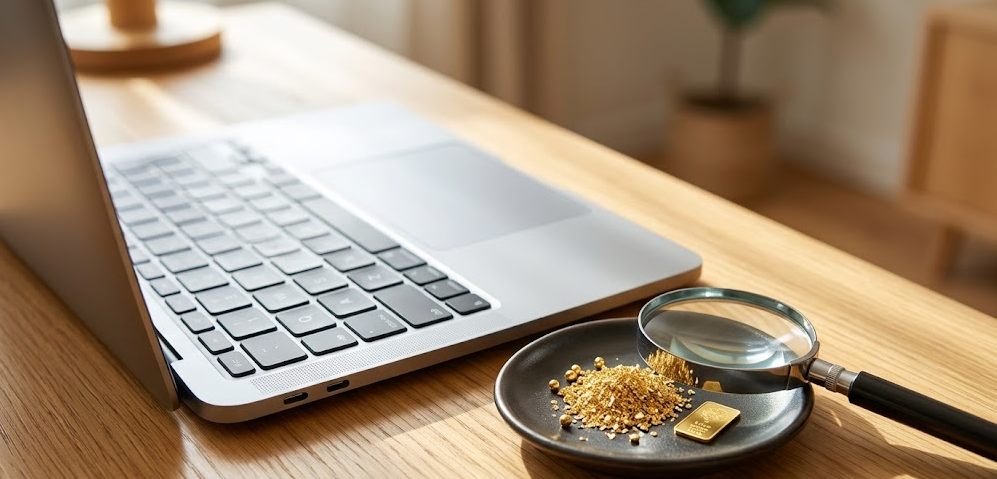
The average laptop contains approximately 0.1 to 0.3 grams of gold spread across its CPU, motherboard, connectors, and RAM. At today’s gold price of roughly $150 per gram, that works out to somewhere between $15 and $45 worth of gold in a single laptop. You can sell it, but doing so profitably as an individual is harder than it sounds. Here is everything you need to know.
Why Laptops Contain Gold at All
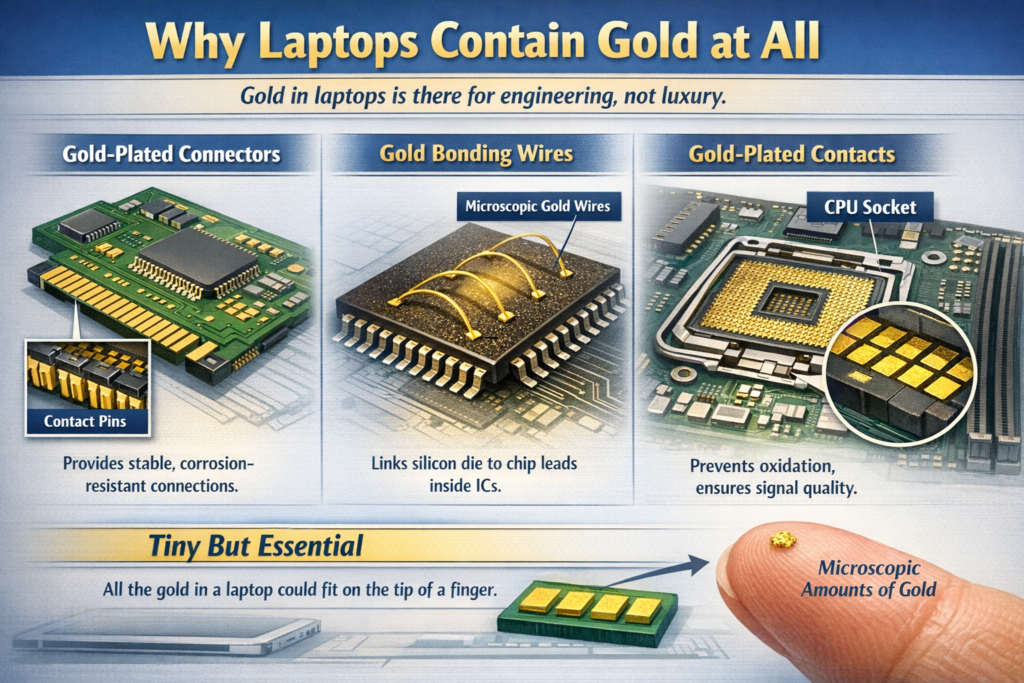
Gold seems like an unlikely material inside a piece of consumer electronics, but it is there for very practical engineering reasons that have nothing to do with luxury. Gold is used inside laptops because it is one of the most electrically conductive metals on earth, it does not corrode or oxidize over time, and it bonds reliably with silicon at a microscopic level in a way that cheaper metals cannot match.
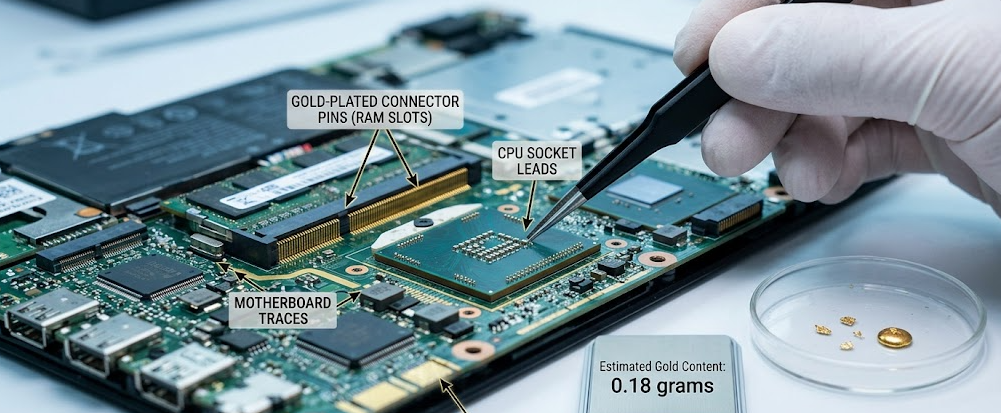
Inside a laptop, gold performs three main jobs. First, it coats the contact pins and edge connectors on circuit boards, ensuring a stable electrical connection that does not degrade over years of use. Second, it is used as ultra-thin bonding wire inside integrated circuit (IC) chips, connecting the silicon die to the chip’s outer leads at a scale measured in micrometers. Third, it is applied as a thin plating layer across certain contact surfaces on the motherboard and CPU socket to prevent oxidation from disrupting signal quality.
None of these applications require large amounts of gold because the quantities involved are microscopic. The entire gold content of a laptop can comfortably sit on the tip of a finger, but it is spread across dozens of components in layers so thin they are often invisible to the naked eye.
How Much Gold Is Actually in a Laptop?
The honest answer is: it depends significantly on the age, brand, and model of the laptop. Older laptops from the 1990s and early 2000s used substantially more gold than modern ones because manufacturing processes were less efficient and gold was applied more liberally. Modern flip-chip packaging and advanced plating techniques have reduced gold content in newer devices.
With that context, here are the most reliable estimates based on current research:
Whole laptop (combined all components):
-
Modern laptop (post-2015): 0.1 to 0.2 grams of gold
-
Older laptop (pre-2010): 0.2 to 0.5 grams of gold
-
Average across all ages: approximately 0.1 to 0.3 grams
By individual component:
SD Bullion’s research on laptop gold content estimates that just over 0.1 grams of gold can be recovered from a single average laptop, with the CPU typically being the single richest individual component in the entire device.
What Is That Gold Worth in 2026?
Gold is currently trading at approximately $150.33 per gram as of April 2, 2026, with spot prices reaching as high as $153.96 per gram intraday. This represents one of the highest gold prices in recorded history, meaning the gold inside old laptops is worth more right now than at almost any prior point.
Using that price, here is what the gold in a typical laptop is actually worth:
It is worth noting that gold is not the only precious metal inside a laptop. Silver, palladium, copper, and tin are all present in larger quantities than gold, and together they can add another $10 to $30 in recoverable metals value per device. If you are evaluating a laptop strictly for its materials value, gold is the headliner but not the whole story.
Where Is the Gold Located Inside a Laptop?
Knowing exactly where the gold is helps you understand both the recovery process and why professional equipment is needed to extract it efficiently.
The CPU (Central Processing Unit)
The processor is the single most gold-dense component in most laptops. Gold is present in two places inside the CPU: as thin plating on the contact pads on the underside of the chip (the pins or lands that connect to the motherboard socket), and as microscopic gold bonding wires inside the chip package itself that connect the silicon die to the external leads. Older CPUs used ceramic packaging with more visible gold plating; modern laptop CPUs use organic substrates with thinner gold layers.
The Motherboard
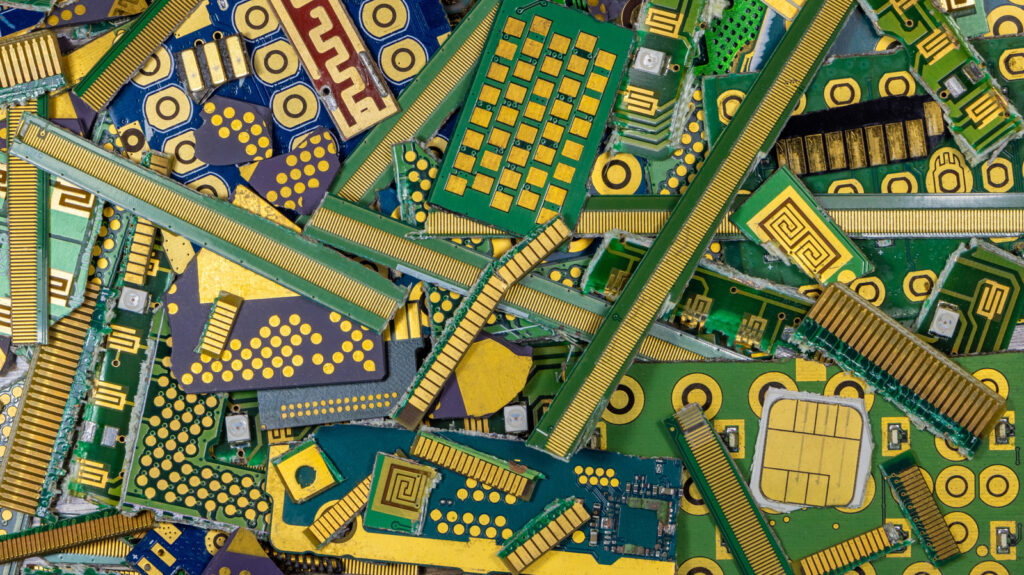
The motherboard contains gold in its edge connectors (the gold-colored fingers you can see along expansion slots and card edges), in the surface pads where components are soldered, and in certain trace layers within the board’s laminated structure. Specialty Metals’ guide on gold in computers describes the motherboard as the “mother lode” of the laptop, noting that its edge contacts and surface plating often account for more recoverable gold than any other single board.
RAM Modules
RAM sticks contain gold along their finger connectors (the contacts that slide into the memory slot) and inside the IC memory chips themselves as bonding wire. Older SIMM and early DDR RAM used thicker gold plating on connectors than modern DDR5 modules do. The gold content per stick is small (typically under 0.03 grams), but RAM is worth processing in bulk because multiple sticks are easy to collect.
Hard Drive and SSD Circuit Boards
Traditional spinning hard drives contain a small controller circuit board with IC chips that use gold bonding wire internally. SSDs have slightly more surface-mounted IC components and therefore slightly more accessible gold contacts, but neither type contains large amounts. The gold is present but modest.
Connectors and Ports
USB ports, HDMI and DisplayPort connectors, headphone jacks, and other I/O ports use gold-plated contacts to resist corrosion and maintain reliable connections across thousands of insertions and removals. These are trace amounts individually but collectively add up across the full connector count of a typical laptop.
Can You Actually Sell the Gold From a Laptop?
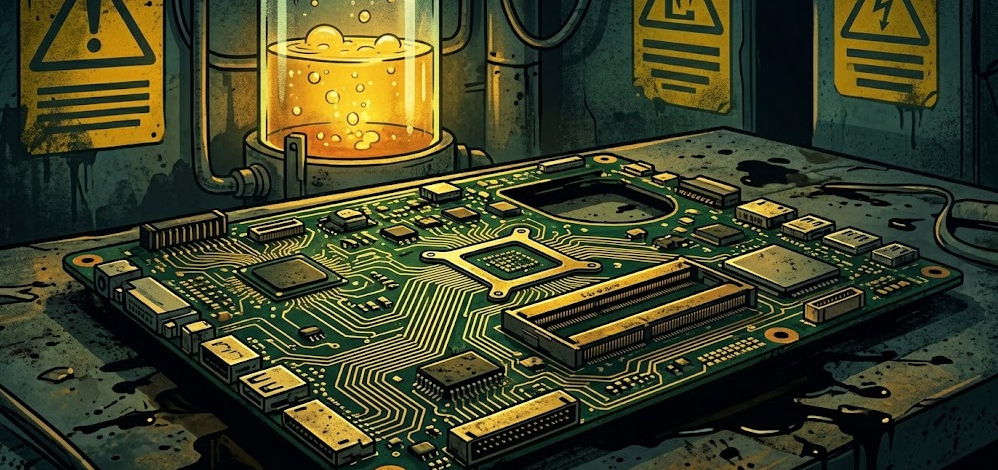
This is where the real-world economics become important, because the answer is yes, but the pathway matters enormously. There are three different approaches, each with very different economics and effort levels.
Option 1: Sell the Whole Laptop as E-Waste to a Certified Recycler
This is the simplest, most accessible option for most people. You do not extract any gold yourself. You hand over the whole device (or a batch of devices) to a certified e-waste recycler who handles all the processing. The recycler pays you a small amount based on the estimated precious metals content of the device.
What you get: Typically $1 to $5 per laptop as a gold/metals credit, sometimes included as part of a broader e-waste buyback rate for the full device
Best for: Anyone who has one to a handful of old laptops to dispose of responsibly
Where to do it: Certified e-waste programs like Call2Recycle, municipal e-waste drop events, Best Buy’s electronics recycling program, and corporate IT asset disposition (ITAD) companies
Realistic expectation: Most individual consumers will get more value by selling the working laptop as a whole unit for its electronics value (screen, battery, keyboard, SSD) than as scrap for its metals content alone.
Option 2: Sell Individual Components to an E-Scrap Buyer
Rather than handing over the whole laptop, you disassemble it and sell the most valuable components (CPUs, motherboards, RAM) separately to specialist e-scrap buyers who pay per pound or per unit based on precious metals content.
What you get: Specialist buyers pay roughly $0.50 to $3.00 per laptop CPU, $1 to $5 per motherboard, and $0.10 to $0.50 per RAM stick, depending on age and model
Best for: People with access to large quantities of scrap electronics, repair shops, or IT department disposals with dozens or hundreds of units
Where to do it: eBay (listing lots of scrap CPUs or motherboards), Precious Metals Reclaiming Service, ECS Refining, and specialist forums like the Gold Refining Forum
The volume problem: Selling component by component makes the economics clearer but not necessarily better for small quantities. Shipping costs and buyer fees eat into returns unless you are moving bulk quantities.
Option 3: DIY Gold Recovery (Not Recommended for Most People)
The third option is extracting the gold yourself through chemical processing, specifically using acid-based processes (aqua regia, which is a mixture of nitric and hydrochloric acids) that dissolve the base metals and leave gold precipitate behind. This is the method shown in e-waste recovery videos, and it does work in principle.
The serious problems with DIY recovery:
-
Aqua regia produces toxic nitrogen dioxide and chlorine gas fumes that are dangerous without proper laboratory ventilation and safety equipment
-
The chemical waste produced is hazardous and cannot be disposed of through normal channels
-
Recovery rates for an inexperienced operator are low, meaning you lose a significant percentage of the gold you are trying to extract
-
From a single laptop, you are processing 0.1 to 0.3 grams of gold at most, generating substantial chemical waste and safety risk for a return of $15 to $45 at best
DIY gold recovery is an interesting chemistry project at scale with hundreds of units and proper equipment. For one or two laptops, the cost of chemicals, safety equipment, and waste disposal almost certainly exceeds the value of the recovered gold.
The Scale Problem: Why Gold in Laptops Matters Globally but Not Individually
The economics of laptop gold are a classic example of a resource that is significant in aggregate but not individually actionable. Consider these numbers:
-
The world produces approximately 50 million metric tons of e-waste per year
-
At an average of 0.15 grams of gold per laptop, a city collecting 100,000 old laptops holds 15 kilograms of gold in that pile, worth approximately $2.25 million at current prices
-
Industrial e-waste processing operations routinely extract $10 to $20 worth of gold per laptop unit when processing at scale, because their chemical recovery rates and labor costs are optimized in ways individual operators cannot replicate
This is why e-waste recycling is a serious and growing industry, not a hobbyist activity. This YouTube video recovering $500 worth of gold from scrap laptop CPUs illustrates exactly how this works at a small semi-professional scale: multiple CPUs, proper chemical setup, and a real but modest return that only makes sense above a certain volume threshold.
The practical implication for an individual: your old laptop has more gold value than most people realize, but that value is best captured by using the right channel (certified recycler or whole-device sale) rather than by trying to extract it yourself.
How the Gold Extraction Process Actually Works (Industrial Scale)
For context on why professional operations are so much more efficient than DIY attempts, here is how industrial e-waste gold recovery works at a certified facility:
Step 1: Collection and sorting
Laptops are sorted by type, age range, and estimated metals content. High-value components (older CPUs, server boards) are separated from standard consumer boards.
Step 2: Mechanical dismantling
Devices are disassembled and components are categorized: circuit boards, CPUs, RAM, connectors, and plastics are processed through separate streams.
Step 3: Shredding and granulation
Circuit boards are shredded into small pieces and granulated to expose the metal content within the laminated layers, increasing the surface area available for chemical extraction.
Step 4: Chemical extraction
The granulated material is treated with either hydrometallurgical solutions (acid-based leaching) or, in more advanced facilities, bio-leaching processes that use specialized bacteria to selectively dissolve base metals and liberate the precious metals.
Step 5: Precipitation and refining
Gold is precipitated out of the solution using reducing agents, then smelted and refined to 99.9% purity. At this point it re-enters the supply chain, often going directly to electronics manufacturers for use in new circuit boards.
The full loop from your old laptop to new circuit board gold can take as little as 90 days at a modern certified facility.
Older vs. Newer Laptops: Which Have More Gold?
Age is the single biggest factor in how much gold a laptop contains, and the difference is substantial:
Pre-2000 laptops: These contain the most gold per unit, often 0.5 grams or more. Ceramic chip packages, DIP (dual in-line package) ICs with long gold-plated leads, and through-hole PCB construction all used more gold than modern surface-mount technology.
2000 to 2010 laptops: A meaningful middle tier, typically 0.2 to 0.4 grams. Pentium 4, Core 2 Duo, and early Core i-series CPUs used gold wire bonding and had more visible gold finger contacts than their successors.
2010 to 2018 laptops: Gold content begins dropping noticeably as flip-chip packaging replaces wire bonding for most laptop CPUs. Typically 0.1 to 0.2 grams per device.
Post-2018 thin-and-light laptops: The lowest gold content of any era. Ultra-thin board design, reduced connector counts, and highly optimized manufacturing have pushed gold use down to 0.05 to 0.15 grams in many modern ultrabooks. Apple Silicon MacBooks and ARM-based Windows laptops fall toward the lower end.
If you have a pile of old laptops you are deciding whether to recycle, the pre-2010 units are meaningfully richer in gold content and worth prioritizing for the metals stream.
Brands and Models With the Highest Gold Content
Not all laptops are equal in gold content. Beyond age, a few factors push certain models toward higher precious metals value:
Business and enterprise laptops (ThinkPad, Dell Latitude, HP EliteBook): These tend to have more robust PCB construction, more connectors, and higher component counts than consumer models, which translates to slightly more gold per unit.
Gaming laptops: Higher-end GPU boards, more RAM slots, and more complex motherboards mean more contact surfaces and IC chips, adding slightly to total gold content.
Workstation laptops (ThinkPad P-series, HP ZBook, Dell Precision): The most gold-rich category of modern laptops due to workstation-grade CPUs, ECC RAM support, and professional GPU boards with more complex circuitry.
Ultra-thin consumer laptops (MacBook Air, Dell XPS 13, Surface Laptop): The least gold-rich category. Minimalist board design, integrated everything, and aggressive weight reduction mean fewer components and less gold.
What About the Other Precious Metals in a Laptop?
Gold gets the attention, but a complete picture of a laptop’s recoverable metals value includes several other materials worth factoring in. Silver is currently trading at approximately $2.31 per gram ($72 per troy ounce), palladium at approximately $45.85 per gram ($1,426 per troy ounce), copper at around $0.01 per gram ($4.50 per pound), and aluminum at roughly $0.0025 per gram ($1.15 per pound) as of April 2026.
Gold dominates the precious metals value despite its small quantity because it commands the highest price per gram of any common metal in electronics. The total recoverable metals value across all precious and base metals in a typical laptop ranges from approximately $18 to $56, with gold accounting for roughly 60 to 75 percent of that total at current prices.
Frequently Asked Questions
Is it worth pulling the gold out of my old laptop myself?
Almost certainly not for one or two laptops. The chemicals required (aqua regia) are seriously hazardous, the waste disposal adds cost and complexity, and you will recover $15 to $45 in gold at best from a single device. Sell the working laptop whole for significantly more, or drop it at a certified e-waste recycler.
Which laptop component has the most gold?
The CPU is typically the single component with the highest gold density, particularly in older Pentium and Core 2 Duo processors. The motherboard contains more total gold by area but spread across a much larger surface, making it harder to recover efficiently.
Do MacBooks have more gold than Windows laptops?
Not significantly. Modern MacBooks use Apple Silicon chips with highly integrated design, which actually reduces the number of discrete components and gold contact points compared to older Intel-based Macs. Older MacBook Pros (2012 to 2019) with discrete AMD or Nvidia GPUs have more total circuit board complexity and slightly more gold.
What happens to the gold after I drop my laptop at an e-waste recycler?
Certified facilities process the device through the industrial extraction cycle described above. The refined gold is sold back to electronics manufacturers, who use it in new circuit boards. Recycled gold from e-waste is chemically identical to mined gold and is increasingly preferred by manufacturers because it carries a lower carbon footprint.
Is gold mining from e-waste more efficient than conventional gold mining?
Significantly more efficient per ton. One ton of e-waste circuit boards yields 8 to 11 troy ounces of gold. One ton of average gold ore from a conventional mine yields approximately 0.009 troy ounces. E-waste is effectively a gold ore that is 1,000 times richer by weight than what mining companies dig out of the ground, which is why urban mining is one of the fastest-growing segments of the recycling industry.
Will the gold content of laptops go up or down in the future?
Down, almost certainly. The semiconductor industry is actively working to replace gold bonding wire with copper and aluminum wire in all but the most demanding applications (aerospace, military, medical). Gold use in consumer electronics has been declining for two decades and that trend is expected to continue. Older devices will remain more gold-rich than newer ones for the foreseeable future.
The Bottom Line
A typical modern laptop holds between 0.1 and 0.3 grams of gold, worth $15 to $45 at April 2026 gold prices. That gold is real, it is recoverable, and at the current record-high gold price it is worth more in absolute dollar terms than at any prior point in history. However, for an individual owner with one or a handful of laptops, the most practical path to capturing that value is either selling the whole working device for its electronics value or dropping it at a certified e-waste recycler who can process it at scale.
DIY extraction is not practical or safe without professional equipment, and selling components piecemeal only makes financial sense if you are working with dozens or hundreds of units. The gold is there. Getting to it economically is the harder part.